Cycling for Change

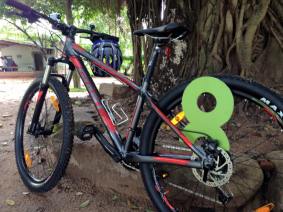
bike ox
Cycle Sri Lanka Challenge 2015

In November 2015 six Oxfam supporters set out to ride 300km through the hills of Sri Lanka as part of Inspired Adventures. I had the pleasure to ride alongside them and see first hand the great work Oxfam does around the world.


tupperware
My sister’s successful fundraiser

I have to admit I was very nervous. (I think we all were). We had spent months training and fundraising for this unique field trip. Thanks to the help of our great supporters we have raised over $20,000. My sister and her kids held a fundraiser on my behalf and donated over $400! This ride was as much for them as for myself.

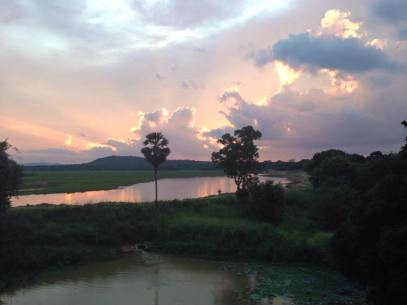
Sri Lanka is breathtakingly beautiful. Around every corner is something remarkable, stunning, adorable or simply serene. The landscape is a colourful tapestry of crystal clear coastlines, wild jungles, wetlands, immaculate tea plantations and bustling towns but everything seemed still and quiet. Everything moves at a different pace. Drivers rarely exceeded 50km/ph and the cattle and dogs lorded over the roads and traffic would flow around them. Except for the notorious Red Buses which weaved through the tightest turns at un-godly speeds.
sri lanka
Dambulla, Sri Lanka

The ride through the centre of Sri Lanka was rich with ancient history. Our guide, Chandima, was a font of knowledge and his passion for his work made this adventure so enriching. We mostly saw and learnt about Sinhalese culture, religion and influence. We wandered through Anuradhapura, Polonnaruwa and Nuwra Eilya the three great cities of ancient Sri Lanka and marvelled at the grand architecture, Buddhist artwork and the splendour of nature reclaiming the landscape. The further south we moved the more we could see the mark of European occupation. The frumpy buildings and tea plantations were a stark contrast to the organic sprawl of nature. But the real highlight and wonder was when we met a group of inspiring peace makers whom shared their stories of the impact of nearly three decades of conflict and their recovery after the 2004 Boxing Day tsunami.

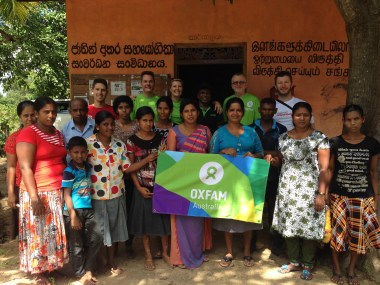
Jatheen Athara Sahayogitha Sangwardena (JSSK) is a community based organisation run by Sinhala, Tamil, Muslim and Indigenous community members from across the Polonnaruwa district. They were formed in 1998 and have had a long relationship with Oxfam Australia since 1999. They have multi-faceted approach to their work, with a strong focus on women in leadership roles. The main aim is peace building through education, connection, sharing and collective action as well as economic justice, gender justice and disaster risk reduction and recovery.
IMG_6689
Group photo at JSSK Office

The group told us about some of the issues facing their community. They had all been affected by the conflict and many women were left as the heads of their households but with no claim to land or access to a livelihood. JSSK and Oxfam’s programs enable them to attain their rights, connect and collaborate with their community and transform the status quo. Many of the women now have ownership of their land and are involved in different livelihood programs like JSSSK’s women led sustainable Rice Processing Group which aims improve community health by reducing the use of pesticides and promotes planting a variety of rice species.  In addition to this work the committee also supports victims of gender based violence and have introduced counselling services in the local hospitals.

Thilaka
Thilaka is a participant in JSSK and Oxfam’s leadership and livelihoods program

We had the pleasure of meeting Thilaka, a community leader and participant in Oxfam’s cattle rearing program. You know the cards you buy from Oxfam where you “give a goat” or “build a well”, this was one of those programs!  Thilaka told us how participating in the cattle program has not only improved her life but also the health of her community. She sells high quality milk and opened a shop.

No natural or constructed wonder can really compare because there is nothing more awesome than a woman, empowered and peaceful, supporting the rise of her peers into their own strength. Many of these members can’t speak each other’s language but they work side by side and build an inclusive community and a better future together. These kind of programs are made possible because of the generous contribution people make to Oxfam.

It makes a real difference in the lives of individuals and whole communities when people pitch in. Your donation really helps and all the riders and the members of JSSK have endless gratitude to our supporters. Thank you! You’re a life-changer!

Today is the last day for my fundraiser. If you would like to donate please follow this link: https://my.oxfam.org.au/fundraiser/view/3339
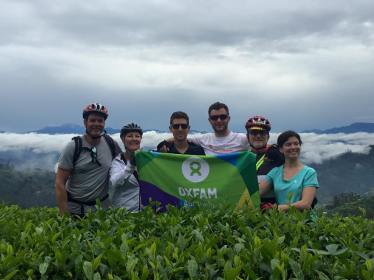
groupie
Team Oxfam: Dave, Sim, Alex, Richard, Bill and Ally

Cultivating Kindness

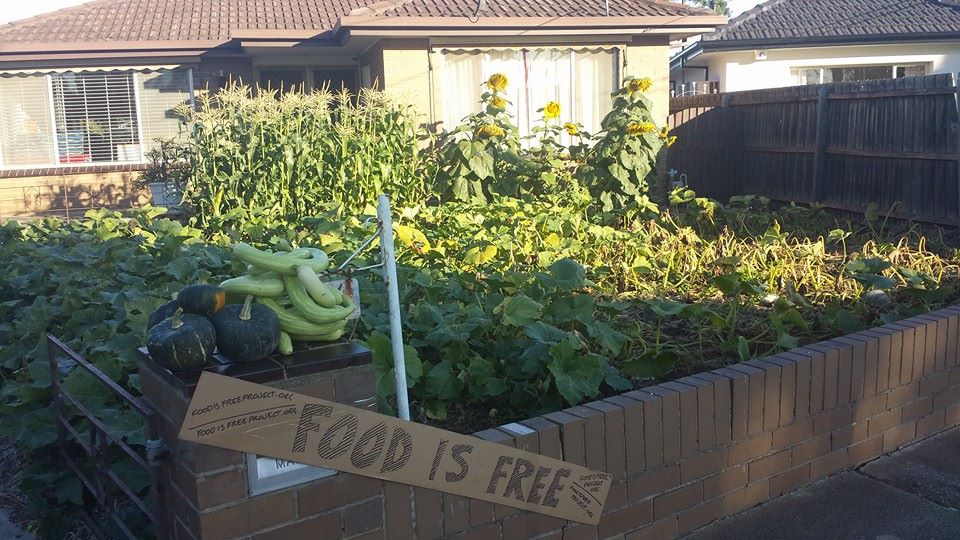
Paul SargeantThe Food is Free movement has been growing since 2012. What started as one front yard garden bed has bolted onto a grassroots movement, taking place in over 300 cities around the world, including Melbourne.

In March 2015 Paul Sargeant and his family pitched a sign inviting their neighbours to enjoy the spoils of their garden. Food Is Free Sunshine took its roots and is slowly growing to be a permanent fixture in the community.

Photo: Paul Sargeant March 2015
Food is Free Sunshine first sign

“Yeah,  you just have to boil it down to essentials and fundamentals. I mean we need food, we need a roof and we need clothes. Three staples. But there’s one missing and that’s social engagement with your community.” ~Paul Sargeant~

When Paul was interviewed by Channel 7 he sent an email around work to share the news. It caught my eye and imagination. For something so seemingly simple it reaps great rewards! It’s exactly the thoughtful and progressive act of kindness that inspires connection and action. I asked Paul if I could interview him and was welcomed into the Sargeant Home with cups of tea, a guided tour by Will (3) and a special meet and greet with Goldie his favourite hen.

Photo: Paul Sargeant 2015

“Food is Free is not a community garden [it’s] growing for the community” ~Paul Sargeant~

The basic concept is growing whatever you want and sharing it. However, Paul and Kate’s aim is to demonstrate to their kids and peers that sharing shouldn’t just be among those involved with a group or movement. They have made it entirely inclusive.

Give it away because then the community is going to feel like you are doing something for them and hopefully you’ll be an inspiration and inspire them to do the same thing. Or at least to engage them in it.”

Kate’s mother once questioned the name “Food is Free” because “food’s not free it’s bloody hard work.” Both Paul and Kate took it as food for thought and a fair point in some ways but they stand by the concept and prefer to work hard for their food because for all their energy and effort they reap the benefits of nutritious, delicious and seasonal fruits and vegetables that enrich their community and breaks away from dependency on a clunky and often unfair system.

The Food is Free Sunshine Facebook group reflects their family values of being inclusive and supportive. The regular updates are encouraging and very heartwarming not to mention very helpful. Since joining I have managed to sprout shallots, garlic, basil and chillies.

“What I like about Food is Free is that it’s very broad,” Paul explained that gardening should not scare people away which is why he not too phased by people asking about all sorts of cultivations. “I don’t care if it’s GM I don’t care if it’s organic, I don’t care if it’s permaculture I don’t care if he plants something that’s poisonous. At least he’s planting something, he’s getting his hands in there and that’s the first step in learning.”
So get into it! Learn to plant, grow and feast on your hard work- it’s delicious. 

Photo: Paul Sargeant

Aya Ono on Painting with the Colours of Peace

Aya

Aya is the kind of person who brightens the gloomiest of days. She can expands your mind with philosophical ponderings and paint a picture of peace with her words. I met with her a few months ago on a very dreary day in May- she is my first victim interviewee. It was like any other catch up but this time she shared her secret into how her mind ticks. Aya’s insightfulness into her actions formed early on in her childhood when a fox taught her to question her intentions and what it means to “do good”.

When she was a young girl her path was crossed by fox wandering along the road. It looked hungry so instinctively she wanted to help.  She offered it food and felt good that her act of kindness had “saved” this fox’s life. Her father watched on in bemusement as his ten year old daughter attempt to befriend the wild creature. When he called her back to the car he saw her hesitate and asked if she was going to stay with the fox forever. She thought the fox needed her! She couldn’t abandon it but she also wanted to go home. It was the first time she remembers feeling conflicted about whether her kind deed was actually helpful.

“You have to think about kindness.”

Reflecting on her own actions and their impact has helped Aya a solid work ethic. Her greatest success and challenge started in 2011 when she co-founded Peace Palette with friend and muse David Nyuol.  It is grassroots organisation which builds on the spectrum of skills and talents of their volunteers and beneficiaries. At every level people are encouraged to contribute ideas, skills and creativity. At the heart of their work is the community’s needs. The community direct and lead the projects with the support from Peace Palette’s volunteers in South Sudan, Japan and Australia.  

Building a grassroots organisation has taken Aya years of dedication, flexibility and creativity. She has a refreshing approach to being the organisations operational director. She doesn’t want to manage people; she wants to inspires them. She describes their work as artist bringing together different cultures and ideologies blend and juxtapose for a dynamic yet harmonious world. She created the name Peace Palette when she was taking the tram through the city and saw all the vibrant and dark colours of the other passengers’ tops. She thought it looked like a painter’s palette and saw how they mixed together perfectly.

One of their biggest challenges is securing investors for their programs. The returns for backing projects like the Nhomalu Children’s Centre aren’t big bucks, it is far more enriching than money. It is life saving and peace building. The ripple effect of a social impact investment (backing meaningful and sustainable projects and businesses) can contribute to peacebuilding and stability in South Sudan and its neighbouring countries for the future. Giving generously or regularly to purposeful organisations makes a huge difference!

I’ve always admired Aya’s compassion and philosophy about kindness but I walked away from our interview with even more respect for her work and values. She appreciates the simple pleasure of sharing food and deconstructing Disney lyrics. When I asked for her advice on what small acts of kindness people can do to create a more peaceful world she paused and looked like an artist contemplating their next brush stroke. “A peaceful society, to me, is a society where people understand each other with words and with actions.”

To find out more and let Peace Palette inspire you follow this link http://www.peacepalette.org/